App & Software Development: How to Start a Profitable Business in 2026
Introduction
In today’s digital era, apps and software solutions are driving the world’s economy. Businesses, startups, and individuals rely heavily on apps and software for efficiency, automation, entertainment, and connectivity. This makes app and software development one of the most lucrative business opportunities in 2026.
Whether you want to develop mobile apps, SaaS products, web software, or custom solutions for clients, the demand for skilled developers and innovative software solutions is skyrocketing.
In this blog, we will explore what app and software development is, types, business models, tools, market trends, challenges, and step-by-step guidance to start a successful venture.
What Is App & Software Development?
App and software development is the process of creating computer programs, mobile applications, or web applications to solve specific problems or provide services.
Key components include:
- Mobile apps (iOS, Android)
- Web apps (online platforms and SaaS products)
- Desktop software (Windows, Mac, Linux)
- Embedded systems and IoT solutions
Development involves designing, coding, testing, deploying, and maintaining applications. Businesses and individuals hire developers to automate tasks, improve productivity, or deliver digital experiences to users.
Why App & Software Development Is Booming
- Digital Transformation: Every business is moving online, requiring apps and software.
- Mobile-First Era: Millions of smartphone users demand high-quality apps.
- SaaS Boom: Software-as-a-Service (SaaS) is growing rapidly across industries.
- AI & Automation: Businesses need AI-powered apps and software solutions.
- Startups & Entrepreneurs: New products require apps and custom software for scaling.
Types of App & Software Development
1. Mobile App Development
Developing apps for iOS, Android, or cross-platform.
Popular Categories:
- Social media apps
- E-commerce apps
- Health & fitness apps
- Educational apps
- Gaming apps
Business Opportunity: Offer app development services or launch your own app product.
2. Web App Development
Web apps run in a browser without requiring installation.
Examples:
- SaaS platforms (project management, CRM)
- Online marketplaces
- Job portals & booking systems
- E-learning platforms
Business Opportunity: Develop subscription-based software or custom solutions for businesses.
3. Desktop Software Development
Applications for Windows, Mac, or Linux systems.
Examples:
- Accounting & finance software
- Graphic design tools
- Productivity software
- Data analysis and reporting tools
Business Opportunity: Sell licenses, subscriptions, or custom solutions to businesses.
4. Enterprise Software Development
Custom software for businesses to manage internal processes, automate workflows, and improve efficiency.
Examples:
- ERP systems
- HR & payroll management
- Inventory management
- Customer Relationship Management (CRM)
Business Opportunity: B2B solutions with long-term contracts and high revenue potential.
5. Game Development
The gaming industry is one of the fastest-growing sectors.
Opportunities:
- Mobile games
- PC & console games
- VR/AR games
Business Opportunity: Monetize through in-app purchases, ads, or paid games.
6. AI & Machine Learning Solutions
AI-powered software is in demand for automation, analytics, and personalization.
Examples:
- Chatbots & virtual assistants
- Predictive analytics tools
- Recommendation engines
- Image and voice recognition apps
Business Opportunity: Offer AI solutions for businesses or create SaaS products.
Business Models in App & Software Development
- Freelancing/Contracting: Work with clients on a project basis.
- Startup Model: Build your own product and generate revenue through subscriptions or sales.
- Agency Model: Create a team of developers for B2B app and software projects.
- SaaS Products: Recurring revenue through subscription-based software.
- Marketplace Apps: Generate income through ads, in-app purchases, or commissions.
- White-Label Solutions: Sell customizable software to other businesses.
Tools & Technologies for App & Software Development
Programming Languages & Frameworks:
- Java, Kotlin, Swift (mobile apps)
- Python, JavaScript, PHP (web apps)
- C++, C#, .NET (desktop apps)
Frameworks & Platforms:
- React Native, Flutter (cross-platform mobile)
- Django, Node.js, Laravel (web development)
- Unity, Unreal Engine (game development)
Database & Cloud Solutions:
- MySQL, MongoDB, PostgreSQL
- AWS, Google Cloud, Microsoft Azure
Other Tools:
- GitHub, GitLab (version control)
- Jira, Trello (project management)
- Figma, Adobe XD (UI/UX design)
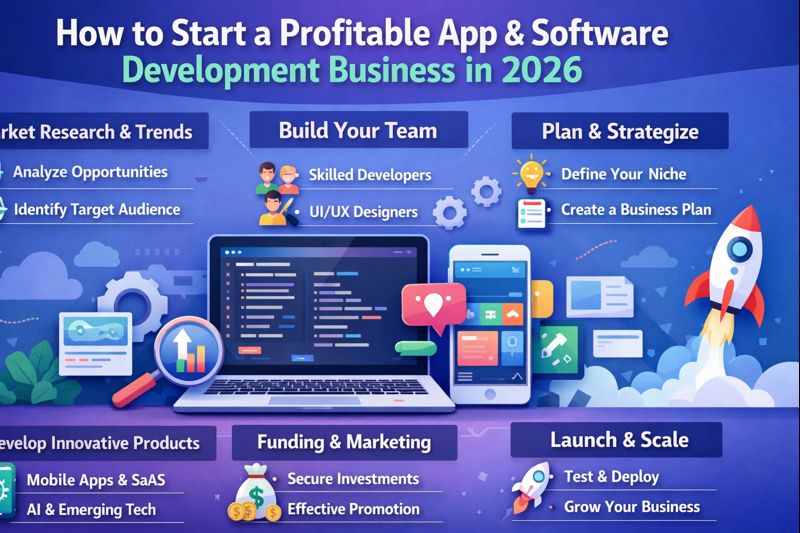
Steps to Start an App & Software Development Business
Step 1: Identify Your Niche & Market
Decide whether to focus on:
- Mobile apps
- Web apps/SaaS
- Enterprise solutions
- Game development
Step 2: Learn or Hire the Right Skills
- Programming and development
- UI/UX design
- Project management
- AI or data analytics (if applicable)
Step 3: Build a Portfolio or MVP
- Showcase your skills with sample apps or previous projects
- Develop a Minimum Viable Product (MVP) for your own product idea
Step 4: Set Up Your Business
- Create a professional website
- Offer services or product demos
- Define pricing models (project-based, subscription, licensing)
Step 5: Acquire Clients or Launch Products
- Freelance platforms: Upwork, Fiverr
- B2B outreach: LinkedIn, email marketing
- App marketplaces: Play Store, App Store
- SaaS subscriptions and trials
Step 6: Deliver Quality & Maintain Software
- Ensure bug-free, high-performance apps
- Provide updates, customer support, and maintenance
- Collect feedback to improve software
Step 7: Scale Your Business
- Hire developers, designers, and project managers
- Expand to new technologies like AI, AR/VR
- Offer enterprise-level solutions for long-term revenue
Benefits of App & Software Development Business
- High Demand: Companies need apps and software constantly.
- High Profit Margins: Custom software and apps can generate significant revenue.
- Scalable Business: SaaS and apps can reach global users easily.
- Flexibility: Freelancing or remote teams allow work from anywhere.
- Recurring Revenue: Subscription-based software ensures stable income.
- Innovation Opportunity: Build products that solve real-world problems.
Challenges in App & Software Development
- Competition: Many developers and startups exist, so innovation matters.
- Rapid Technology Changes: Continuous learning is required.
- Complex Projects: Large software requires skilled teams and project management.
- Client Expectations: Clear communication is essential to meet requirements.
- Time & Resource Intensive: Development, testing, and deployment take time.
Despite challenges, the growth and opportunities in 2026 are massive.
Future Trends in App & Software Development
- AI & Automation Integration: AI-powered apps and tools will dominate.
- Cross-Platform Development: Flutter, React Native, and low-code platforms for faster app launches.
- Cloud-Based SaaS: Remote access and cloud software growth.
- AR/VR Apps: Gaming, real estate, healthcare, and education will expand in AR/VR.
- Cybersecurity Focus: Apps and software must prioritize security.
- IoT & Smart Devices: Apps connecting smart homes, wearables, and devices will grow.
Conclusion
The app and software development business is one of the most profitable and future-proof opportunities in 2026. With digital transformation, mobile-first users, and SaaS growth, the market is only expanding.
Key to Success:
- Identify a niche and target market
- Learn development skills or hire experts
- Build quality apps and software
- Deliver excellent support and maintenance
- Scale through SaaS, enterprise solutions, or cross-platform products
Starting today can position you as a leading developer or agency, generating income, innovating solutions, and creating a future-ready business.