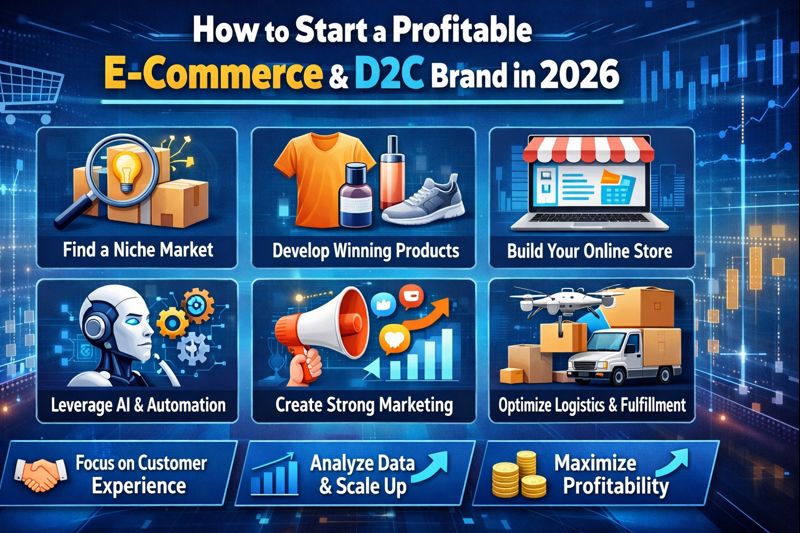
E-Commerce & D2C Brands: How to Start a Profitable Online Business in 2026
Introduction
The world of shopping has transformed drastically in the past decade. Consumers today prefer online shopping for convenience, variety, and affordability. This shift has given rise to E-Commerce platforms and Direct-to-Consumer (D2C) brands, creating one of the most lucrative business opportunities in 2026.
E-commerce refers to the buying and selling of products online, while D2C brands bypass traditional retailers to sell directly to customers, allowing better pricing, stronger customer relationships, and full control over branding.
In this blog, we will explore what e-commerce and D2C brands are, types, business models, trends, challenges, and step-by-step guidance to start a successful business.
What Are E-Commerce & D2C Brands?
E-Commerce is the online buying and selling of products or services. Examples include Amazon, Flipkart, and Shopify stores.
Direct-to-Consumer (D2C) brands sell products directly to customers without intermediaries like retailers or wholesalers. Famous examples include Boat, Mamaearth, and Licious.
Advantages of D2C over traditional retail:
- Better pricing & higher profit margins
- Stronger brand loyalty
- Direct customer feedback & insights
- Flexible marketing strategies
Why E-Commerce & D2C Businesses Are Booming
Several factors contribute to the growth of e-commerce and D2C brands:
- Digital Shopping Trend: Consumers increasingly prefer online shopping for convenience.
- Smartphone & Internet Penetration: Easy access to online platforms across cities and rural areas.
- Shift to Personalized Experiences: D2C brands offer customized products and better service.
- Social Media Influence: Instagram, YouTube, and TikTok marketing drive sales.
- Global Reach: With e-commerce, brands can sell anywhere in the world.
Types of E-Commerce & D2C Businesses
1. Product-Based D2C Brands
Brands selling physical products directly to customers.
Examples:
- Health & wellness: Vitamins, supplements
- Beauty & skincare: Organic skincare, cosmetics
- Fashion & apparel: Trendy clothing and accessories
- Electronics & gadgets: Earphones, smart devices
Business Opportunity: Build a unique brand identity, sell on your website or marketplaces, and market via social media.
2. Niche E-Commerce Stores
Stores that focus on specific products for a target audience.
Examples:
- Eco-friendly products
- Pet care items
- Fitness equipment
- Kids toys and educational kits
Business Opportunity: Targeted marketing to a niche audience can generate loyal customers and higher conversion rates.
3. Subscription-Based D2C Brands
Brands offering products on a recurring subscription model.
Examples:
- Monthly snack boxes
- Skincare & grooming kits
- Educational kits for kids
- Coffee or tea subscriptions
Business Opportunity: Predictable recurring revenue and strong customer retention.
4. Digital Products & Services
Some D2C businesses sell digital products directly to customers.
Examples:
- Online courses
- E-books
- Templates and designs
- Membership & software subscriptions
Business Opportunity: Low overhead costs, unlimited scalability, and global reach.
5. Marketplace E-Commerce Stores
Selling your products through large e-commerce marketplaces like Amazon, Flipkart, and Etsy.
Business Opportunity: Access to an existing customer base, faster sales, and brand recognition.
Business Models for E-Commerce & D2C Brands
- Direct-to-Consumer (D2C) Model: Sell your products directly on your website or app.
- Dropshipping Model: Partner with suppliers who ship products directly to customers. Low investment required.
- Private Label Products: Brand and sell existing products under your label.
- Subscription Model: Recurring deliveries of products for long-term revenue.
- Hybrid Model: Combine D2C and marketplace sales for maximum reach.
Steps to Start an E-Commerce & D2C Brand
Step 1: Identify Your Niche
- Research trends, demand, and competition.
- Focus on products you are passionate about or have knowledge of.
Step 2: Validate Your Idea
- Conduct surveys or pre-orders.
- Test product demand via social media ads or landing pages.
Step 3: Source Products
- Manufacturing: Create your own product line.
- Suppliers: Partner with local or international suppliers.
- Dropshipping: No inventory required.
Step 4: Build Your Online Store
- Platforms: Shopify, WooCommerce, Wix, or custom websites.
- Features: Easy navigation, secure payment gateways, responsive design.
Step 5: Brand & Market Your Business
- Create a strong brand identity: Logo, colors, and tone.
- Use social media marketing, influencer marketing, and SEO.
- Run paid campaigns on Instagram, Facebook, and Google Ads.
Step 6: Manage Operations & Logistics
- Efficient inventory management
- Timely shipping and delivery
- Customer support & feedback
Step 7: Scale Your Business
- Introduce new products
- Expand to new markets or countries
- Collaborate with influencers and run large-scale campaigns
- Use AI and analytics for personalized marketing
Benefits of E-Commerce & D2C Brands
- Global Reach: Sell products worldwide.
- High Profit Margins: Eliminates middlemen.
- Scalable Business: Add products or expand markets easily.
- Direct Customer Relationships: Understand customer needs and preferences.
- Flexibility: Run your business from anywhere.
- Data-Driven Decisions: Collect insights from sales, traffic, and customer behavior.
Challenges of E-Commerce & D2C Businesses
- Competition: Many brands are entering the market, so unique positioning is crucial.
- Logistics & Delivery: Ensuring timely shipping can be challenging.
- Customer Trust: Building trust online requires quality products and transparent policies.
- Digital Marketing Costs: Paid advertising and campaigns require investment.
- Inventory Management: Overstocking or stockouts can impact profits.
Despite these challenges, proper planning, branding, and marketing strategies can make an E-Commerce or D2C business highly profitable.
Future Trends in E-Commerce & D2C Brands
- AI & Personalization: AI tools to recommend products and predict demand.
- Sustainable & Eco-Friendly Products: Growing demand for environmentally responsible products.
- Social Commerce: Selling directly via Instagram, Facebook, and TikTok.
- Mobile-First Shopping: Optimized mobile apps and websites for seamless shopping.
- Voice & AR Shopping: Using voice assistants and augmented reality for product experience.
- Subscription & Membership Models: Continuous engagement and revenue from loyal customers.
Conclusion
E-Commerce and D2C brands are one of the most profitable and scalable business opportunities in 2026. With the rise of digital shopping, mobile users, and social media influence, the market is expanding rapidly.
Key takeaways for success:
- Choose the right niche with high demand
- Build a strong brand and online presence
- Leverage social media, influencer marketing, and paid campaigns
- Deliver quality products and exceptional customer service
- Continuously innovate and scale your offerings
Starting an E-Commerce or D2C brand now can position you for long-term growth and financial success, while also giving you the flexibility to operate from anywhere in the world.